
How to Write a Credible Case Study: Structure, Evidence, and a Reusable Template
A credible case study answers five questions in order: what was the situation, what problem needed solving, what did you do, what changed, and how do you know. The last question is the one most case studies skip, and it's the one that decides whether a reader believes the rest.
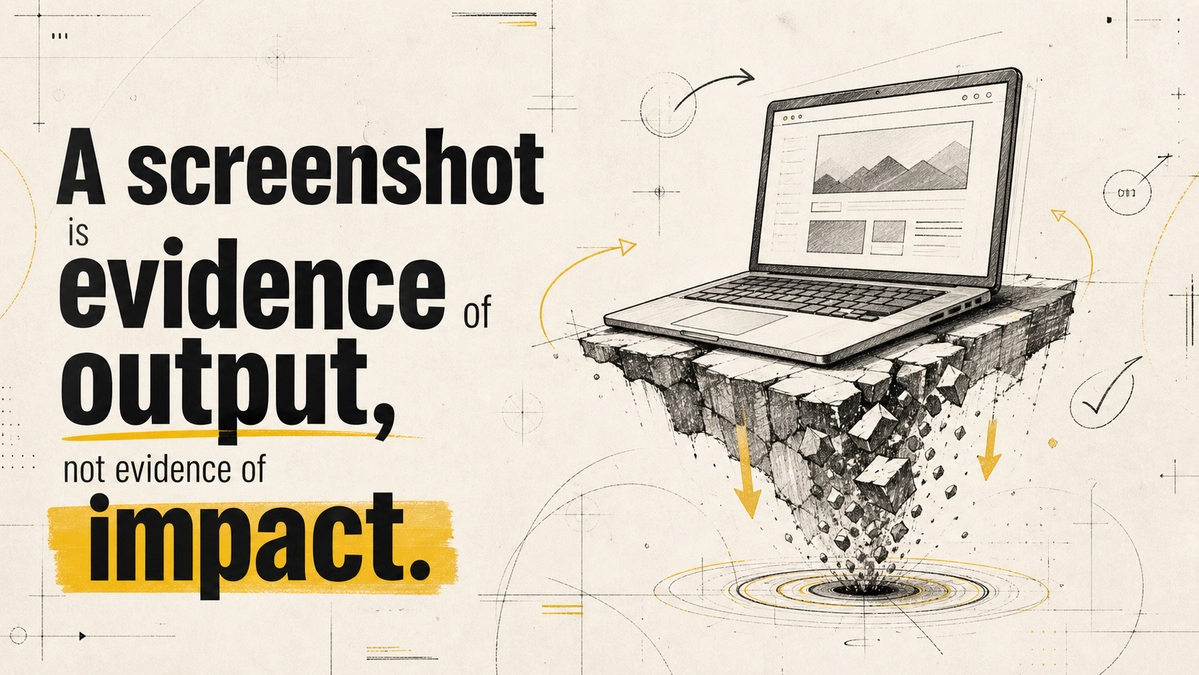
A screenshot of a traffic spike shows that something happened. It doesn't show that you caused it, how it was measured, or whether it lasted. This guide gives you a structure, the evidence standards that make results believable, and a template you can reuse for client work, portfolios, and LinkedIn.
The Structure of a Credible Case Study
- Context. Who the client or project was, their market, size, and starting point. Enough detail for the reader to judge whether the story applies to them.
- Problem. The specific challenge, stated in measurable terms where possible: "enquiries dropped from 40 to 15 a month", not "they wanted more leads".
- Approach. What you actually did, in what order, and why. Include the decisions you made and the options you rejected.
- Results. What changed, with numbers, a baseline, a time period, and the source of the data.
- Evidence and limits. How the results were measured, what else might have contributed, and what didn't work.
- Lessons. What you would repeat or do differently. This is where expertise shows.
Keep these sections separate. When activities and outcomes blur together, readers can't tell what caused what.
What Makes Results Believable
Every result statement should carry four things:
- A baseline: what the number was before.
- A time frame: over what period it changed.
- A source: where the number came from, such as Google Analytics, a CRM report, or an invoice system.
- Context: anything else that changed at the same time, such as a seasonal peak, an ad campaign, or a price change.
| Weak result statement | Credible result statement |
|---|---|
| Traffic grew 200% | Organic sessions rose from 1,200 to 3,600 a month between January and June, per Google Analytics, with no paid campaigns running |
| We doubled their leads | Contact-form enquiries went from 18 to 37 a month in the three months after launch, measured in the CRM |
| The client was thrilled | The client renewed for a second year and approved a quote to share their name |
Notice that the credible versions are less dramatic and more convincing. Specific, modest, verifiable numbers beat large round percentages every time.
Are Screenshots Enough Evidence?
Screenshots are useful as support, not as proof. A spike in an analytics chart can come from bot traffic, a tracking change, a viral post, or seasonality. On its own it tells the reader nothing about cause.
Use screenshots to illustrate a result you have already explained in text: show the date range, label what the chart measures, and crop out anything confidential. Pair every visual with the baseline, time frame, and source described above.
Getting Permission and Protecting the Client
- Ask before you publish. Get written approval for the client's name, logo, quotes, and any numbers you share.
- Anonymise when needed. "A mid-sized logistics company in Pune" can still be credible if the details are specific.
- Share ranges or percentages when absolute figures such as revenue are confidential, but say that you are doing so.
- Quote real words. Testimonials should be the client's own words, approved by them, not paraphrased praise.
A Reusable Case Study Template
- Title: the result plus the client type, for example "How a Pune Clinic Cut No-Shows with Automated Reminders".
- Summary (2–3 sentences): client, problem, key result with time frame.
- Context: who they are and where they started.
- Problem: the challenge in measurable terms.
- Approach: steps, decisions, and tools used.
- Results: numbers with baseline, period, and source.
- What we learned: one or two honest lessons, including anything that didn't work.
- Client quote: approved, in their words.
Adapting a Case Study for a Portfolio or LinkedIn
The full version belongs on your website or portfolio. For LinkedIn, cut it to the problem, one key decision, and the result, then link to the full story. Recruiters and clients scanning a portfolio want to see how you think, so keep the approach section even in short versions: one paragraph on why you chose a direction tells them more than five screenshots.
Review published case studies once a year. If a result has changed, or a client has moved on, update or retire the story rather than leaving outdated claims live. You can see how we present our own work on the Website Vikreta case studies page.
Frequently Asked Questions
What should a credible case study include?
Context, a clearly defined problem, the approach you took, measurable results with a baseline, time frame, and source, an honest note on limits, and lessons learned.
How long should a case study be?
Long enough to explain the problem, approach, and evidence clearly. For most service businesses, 600 to 1,200 words with a short summary at the top works well. Length matters less than whether every claim is supported.
Can I write a case study without exact numbers?
Yes, if the client won't share figures. Use percentages or ranges, describe qualitative outcomes specifically, and say why exact numbers are withheld. Never invent or inflate figures.
How often should I update case studies?
Review them at least once a year, and update or retire any that describe outdated results, tools, or services you no longer offer.
A credible case study is less about impressive numbers and more about showing your work: the situation, the decisions, and evidence a sceptical reader can check. Get those right and even modest results become persuasive.
Tags
Comments
Be the first to comment.
Related reads

Why Choosing SSG Over SSR in Next.js Can Boost Website Performance
Deciding between SSR and SSG for your Next.js project? This article explains why SSG is the superior choice for performance, speed, and SEO, especially for dynamic content.

Designing for AI Browsers in 2026: UX for People and AI Agents
AI browsers now act on pages for users. Here is what that changes in UI/UX design: labels, states, stable layouts, agent-ready forms, and human confirmation.