
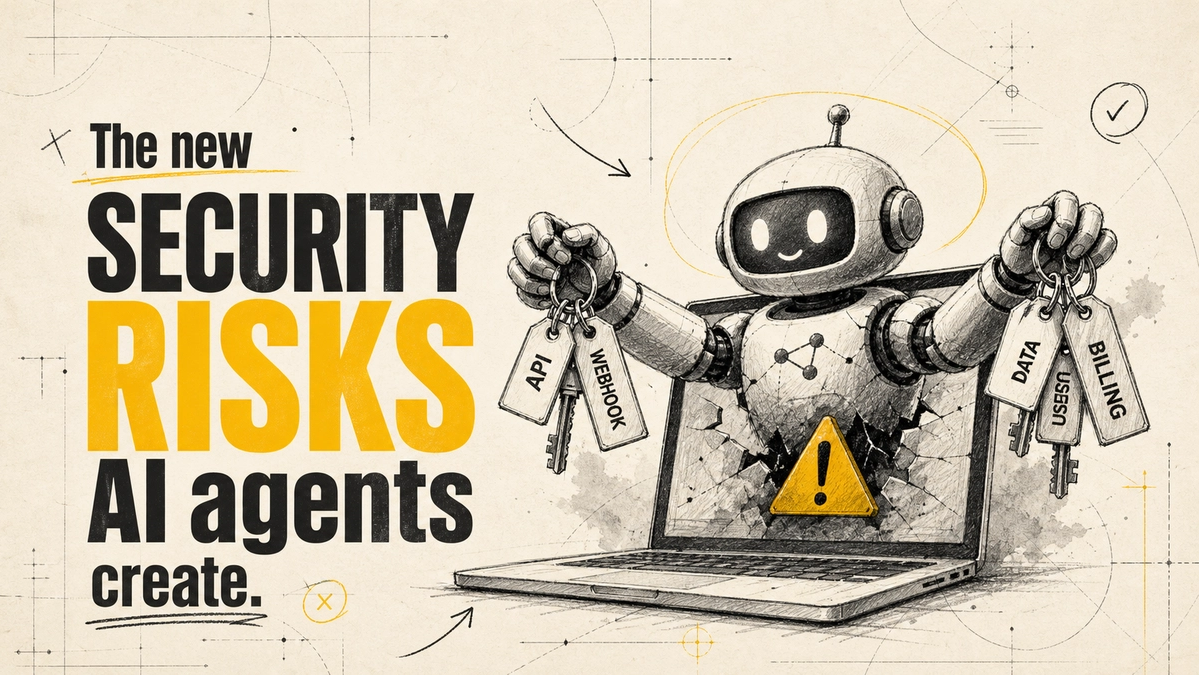
Protecting Your Systems: Why AI Agent API Security is Non-Negotiable

Protecting Your Systems: Why AI Agent API Security is Non-Negotiable
AI agent API security is no longer an abstract concern—it is a daily operational reality. Giving broad API access to AI agents, no matter how user-friendly their interface appears, creates real vulnerabilities. Prompt injection, careless permission management, and slack access controls don’t just threaten data—they open the door to damaging data breaches. With agent API security and robust access control failing, companies have paid a high price. You owe it to your team to understand and actively manage these risks, not just trust the technology.
The Dangers of Broad API Access
Understanding prompt injection and its impact
Prompt injection is one of the most dangerous threats facing AI security today. It allows malicious actors to manipulate AI agents by crafting prompts designed to trigger harmful or unauthorized behavior. These attacks go far beyond clever hacking—they can let someone issue commands that the creator never intended the agent to execute. Exposing APIs without strong guardrails means attackers can steal data, trigger financial actions, or corrupt key systems through simple language input [2]. Ignoring the reality of prompt injection puts every API-connected workflow at risk.
Consequences of over-broad permissions and data breaches
When AI agents have more permissions than strictly needed, your security posture collapses. Over-broad API permissions let agents take irreversible actions, move sensitive files, or manipulate customer records—all without direct oversight. The outcome isn't hypothetical: the average cost of a single data breach in 2023 has already soared past $4.35 million, hurting not just profit but reputation and compliance standing [1]. Without the discipline of tight access controls, any mistake or breach can ripple across your network with devastating speed.
Implementing Strict Access Controls
The principle of least privilege in AI agents
Every AI agent should be governed by the principle of least privilege. Granting each agent only the minimum access required for its tasks limits what a compromised agent can do. This is not about inconvenience—it is about reducing every possible risk surface [3]. By denying unnecessary API permissions, you stop malicious commands, accidental triggers, or unexpected task chaining before they ever start. Overly generous access is an invitation for attackers and an obvious weak point in agent API security.
Real-time logging and monitoring for enhanced security
Real-time logging is a must for monitoring every action an AI agent performs. Every API call, file request, or webhook execution should be tracked live. This approach not only deters insider threats—it creates a record that lets your team spot unauthorized attempts and block suspicious actions on the spot [4]. With granular monitoring of agent activity, even a near-miss or aborted exploit is identified immediately, giving your organization a crucial line of defense against sophisticated intrusions.
Counterarguments to AI Agent Restrictions
Arguments favoring broader API access for flexibility
Some leaders argue for giving AI agents broad API privileges, citing productivity gains and smoother workflow integration. They see broader access as a way for teams to test new workflows, automate complex processes, or allow agents to take on more meaningful business tasks. In their view, agent restrictions introduce unnecessary roadblocks, slow decision-making, and undermine the fluidity promised by AI automation. This efficiency argument holds real weight in high-velocity business environments.
Why a cautious approach still prevails
While flexibility matters, the risks vastly outweigh the convenience of unfettered API access. Relying on trust alone invites catastrophe through prompt injection attacks and accidental misuse. Agent API security is not about stifling progress but about making sure progress does not come at the expense of sensitive data and operational integrity. Companies must prioritize security, even if it means adding checks or requiring manual approval for certain actions. The cost of a data breach, compliance penalty, or lost customer trust is far greater than a little workflow friction.
Best Practices for AI Agent API Security
Establishing manual approval processes for irreversible actions
Manual approval for any irreversible AI agent action is non-negotiable. Before an agent can delete files, change key records, or trigger important business functions, a human should review and approve the request. This step breaks the automation chain when it matters most—not to slow work, but to catch errors and block attacks that technology alone might miss. Human oversight is the final line of defense in every secure agent API workflow.
Training and awareness programs for team members
Training your team is just as important as technical controls. Everyone using, configuring, or maintaining AI agents must understand prompt injection, over-broad access risks, and the critical role of access control [5]. Awareness prevents casual mistakes that lead to data breaches. By making agent API security part of onboarding, regular reviews, and security drills, you set a standard that technology alone cannot enforce. A confident, well-informed team is your best safeguard.
Frequently Asked Questions
What is prompt injection in AI agents?
Prompt injection is when a user crafts input that manipulates an AI agent outside its intended behavior. This attack can let someone make the agent execute unauthorized actions or leak data if API controls are weak. It turns a reliable agent into a major vulnerability if left unchecked.
How can logging improve AI agent security?
Logging every AI agent action gives your team a live audit trail. If something goes wrong, logs show exactly what the agent did and when. This real-time visibility helps you catch unauthorized behavior fast and investigate the source before damage spreads across your systems.
What are the risks of trusting AI agents by default?
Trusting AI agents without access controls puts critical systems and data at risk. Agents can act on malicious prompts or bugs, leading to data leaks, financial loss, or unauthorized commands. Blind trust removes the barriers that keep attackers and mistakes from turning into full-scale breaches.
How do I implement access controls for AI agents?
Start by applying the principle of least privilege, granting only the API permissions an agent needs for its specific job. Set up manual approvals for sensitive actions, and use real-time logging to track every request. Combine these controls with team training on agent risks for strong protection.
AI agent API security is the line between trustworthy automation and unnecessary risk. Attackers adapt fast, and complacency creates opportunities they will exploit. Put strong technical measures, oversight, and a vigilant team in place, and your organization will not just dodge today’s threats but stay prepared for whatever tomorrow’s adversaries invent next. Forward-thinking teams will make intentional security choices and never treat friendly interfaces as a promise of safety.
References
IBM — Cost of a Data Breach Report 2023
OpenAI — Understanding prompt injections
NIST — Principle of Least Privilege
Microsoft — Best practices for Azure Monitor Logs
NIST — SP 800-50 Rev. 1, Building a Cybersecurity and Privacy Learning Program
Comments
Be the first to comment.
Related reads

Unlocking the Value of AI Automation ROI in Workflow Transformation
Discover how transforming a 20-hour weekly workflow into just one hour demonstrates the powerful ROI of AI automation. Learn about the essential human oversight required.
Choosing the Right Automation Tool: Make vs n8n vs Custom Code
Discover how to choose the best automation tool by understanding the strengths of Make, n8n, and custom code based on maintenance and team capabilities.

