Understanding the Multiple Factors Behind Custom CRM Development Cost in India
Understanding the Multiple Factors Behind Custom CRM Development Cost in India
Getting an accurate custom CRM development cost in India is tougher than many expect. Small business owners are quickly overwhelmed by wildly different CRM development pricing and a maze of technical details. The reality is, a CRM quote isn’t just a final number—it’s a reflection of your business needs and the complexity of your chosen features. If you rush to compare quotes on price alone, you risk budget overruns, missed requirements, and hidden costs. A careful look at every line item is the only way to make a smart, lasting investment in your CRM for small business, whether you build or buy.
Decoding Custom CRM Development Pricing
The hidden factors affecting CRM quotes
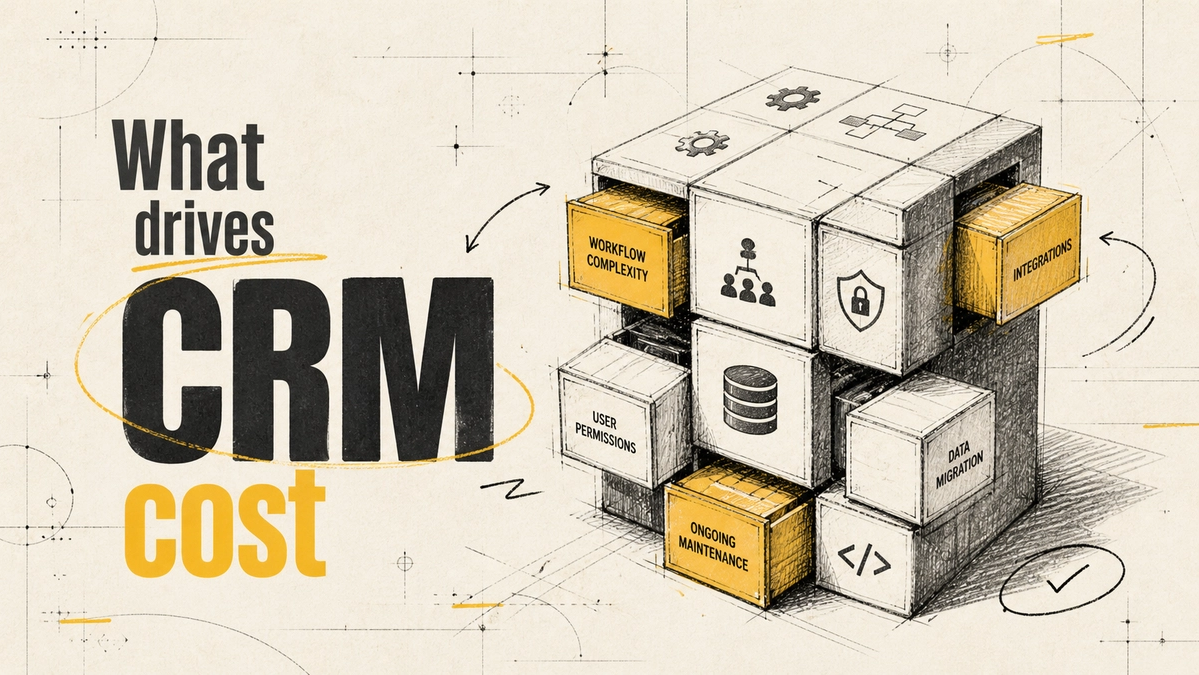
A CRM proposal with a single number is misleading. There are several moving parts hidden behind that quote, such as workflow rules, user permissions, required integrations, data migration needs, and ongoing support. Too many companies gloss over these details and get an unpleasant surprise when additional features or changes drive up the real cost. Recent guides show CRM pricing in India ranges from $15,000 for basic solutions to over $300,000 for enterprise-grade systems, based on the mix of features and depth of customization required [1].
Comparing quotes: what to consider
Simply looking at the headline figure in each CRM quote is a recipe for regret. You need to know exactly what each line item includes and, more importantly, what’s excluded. Does the quote cover full data migration, third-party integrations, admin training, or just basic user support? Properly comparing CRM proposals demands detailed questions and careful review of all modules and terms of service. The businesses who get the best fit aren’t those who pay the least—they’re the ones who investigate every cost driver from the start [1].
Budgeting for Workflow Complexity and Integrations
Understanding workflow requirements
Your CRM system’s complexity is not just a technical detail—it is the core factor in both the project timeline and total cost. Workflows range from simple lead management to multi-tiered sales automation and detailed permission setups. Even small businesses often underestimate how tailored their workflows must be to match their operations. Each extra layer or conditional step in a workflow means more configuration and more budget required to get it right [3].
Importance of integrations in cost
The dream of seamless integration with your existing tools—accounting, inventory, marketing, and more—can quickly drive up your custom CRM development cost India. Each integration is unique. Custom connectors need to be developed and thoroughly tested to avoid disruptions. Some systems play nicely together, while others demand significant developmental effort. The challenge is that integration costs often sit outside initial quotes, only showing up after technical assessments, and this is where most budgets implode [4].
Counterargument: Off-the-Shelf vs. Custom CRM
Benefits of off-the-shelf solutions
Plenty of small businesses argue that off-the-shelf CRMs offer enough functionality at a better price. Ready-made solutions have lower upfront costs and allow for quick deployments. Vendors tout their intuitive interfaces, regular updates, and community support. For simpler needs or standard sales cycles, these packaged tools might seem to cover the basics and provide faster time to value. The appeal is obvious, especially for those watching every rupee spent.
Why custom development may be worth the investment
But off-the-shelf solutions begin breaking down as your business evolves. Customization is often limited or comes with steep add-on prices. More importantly, data shows 58% of companies with custom CRMs enjoy greater sales efficiency compared to those using generic platforms [2]. What saves you money at first can actually cost more as workflows get more complex or integrations pile up. The right approach is investing in a solution perfectly tuned to your current and future business—custom CRM development is the only way to get there.
Tips for Small Businesses Choosing CRM Solutions
Steps to clarify business needs
Choosing the ideal CRM for small business starts by getting serious about requirements. Before you meet any vendors, define what tasks must be automated, what existing systems must integrate, and who will use each feature. List your top priorities, then identify optional features that can wait. Detailed planning reduces the risk of missed needs and scope creep, making both build vs buy CRM comparisons far more transparent for everyone involved.
Avoiding common pitfalls in CRM budgeting
Most overruns start with a missing line in the budget—often ongoing support, software updates, or maintenance fees. Small businesses frequently price only the initial deployment and forget total cost of ownership over years. Successful CRM projects plan for updates, troubleshooting, and even eventual scaling. If you budget for the full lifecycle from day one, you avoid getting caught out by hidden software or support costs down the road [5].
Frequently Asked Questions
What are the key factors influencing CRM development cost?
Major factors include workflow complexity, required integrations, scale of data migration, user permissions, and the level of post-launch support you want. Unique business processes or custom features will also affect how much you pay. Each of these details shapes the project scope and total price [1][3][4].
How do I compare CRM quotes effectively?
Compare detailed line items from each vendor rather than looking at just the total price. Pay close attention to what is included versus excluded—especially integrations, migration, and ongoing maintenance. Ask questions when terms are unclear and demand a clear, itemized proposal [1].
Is a custom CRM more beneficial than an off-the-shelf solution?
While off-the-shelf CRMs work for many, custom CRMs consistently deliver higher efficiency and are tailored to exact needs. Custom systems can easily adapt as your business grows, avoiding future inefficiencies, and usually justify their investment for companies with specialized processes [2].
What common pitfalls should small businesses avoid when budgeting for CRM?
Don’t focus only on upfront cost. Remember to include maintenance, updates, and training in your budget. Small businesses often overlook these ongoing expenses, only to face surprise costs and missed requirements as their needs expand [5].
CRM development pricing will always feel complex, but there is no substitute for clarity. Businesses ready to engage seriously with every quote detail make better decisions and avoid costly surprises. As Indian companies get more sophisticated in their CRM demands, expect even more attention on tailoring solutions that support both today's operations and tomorrow's growth.
References
Software Advice — New for 2023: Software Advice’s CRM Software Pricing Guide:
HubSpot — 15 Key Benefits CRM Systems Provide to a Business:
Salesforce — Create a Custom CRM: Your Complete Guide:
Comments
Be the first to comment.
Related reads

The Importance of a UX Audit Checklist Before Redesigning Your Product
Before embarking on a redesign, conducting a thorough UX audit is essential. This article explores the importance of a UX audit checklist and guides you through key areas to improve user experience.
Prepare Your Next.js Site for AI Agents with WebMCP
AI agents will soon interact with your website like humans. Is your site ready? Learn how WebMCP can prepare your Next.js application for this future.