

Creating SEO-Driven Content with AI Follow-Up Questions

Creating SEO-Driven Content with AI Follow-Up Questions
AI follow-up questions SEO is not a side issue—it’s the engine powering deeper engagement and higher rankings today. Treat your content like an evolving dialogue, not a one-shot answer. Most users, much like when speaking to an AI, don’t stop at one query. They want the next step, a clarifying detail, or a comparison. If your content mapping AI search misses these follow-up paths, you leave both users and search engines wanting. Ignoring this AI answer content strategy is ignoring the way your audience actually thinks and asks. Build your approach around these interconnected follow-up question content chains, and watch what happens.
Understanding the Importance of AI Follow-Up Questions in SEO
Why single questions are not enough
One-answer posts ignore how real people look for information. Over 70% of online searches don’t stop after the first question—users naturally have follow-ups that push their investigation deeper [1]. If you only answer the initial query, you’re setting a dead end, not a path. It’s the follow-up question content that creates a sense of flow and makes your content feel genuinely helpful. If you want strong SEO, there’s simply no excuse for surface-level treatment.
The role of follow-up questions in enhancing engagement
When your site anticipates follow-up questions and answers them directly, users stay. They click, they scroll, they find reasons to explore. This deeper interaction signals value not only to visitors, but to search engines as well [1]. Effective AI follow-up questions SEO isn’t about length for its own sake—it’s about cultivating true user engagement through relevant, context-aware responses. That’s how you build authority and trust, and that’s how you climb the rankings.
Mapping User Interactions to Improve Content Strategy
Identifying common follow-up questions
Mapping user interactions means understanding the likely paths people take after their first question. Companies like HubSpot have shown that predicting these routes and designing answers around them leads to higher engagement rates and longer dwell times [2]. Instead of guessing, review your analytics and feedback to pinpoint what readers ask next. Mapping this out is the foundation of your content mapping AI search efforts, letting your site become a trusted guide for common journeys.
Creating a content framework around interactions
Building a framework involves deliberately linking each seed answer to its logical next question, forming a structured, navigable content web. This isn’t about overwhelming visitors, but rather meeting them where they are in their search process. Directly mapping user questions to related content means fewer dead ends, better SEO signals, and improved key metrics like dwell time and click-through rate [5]. With a mapped structure, your AI answer content strategy avoids randomness and gains predictable SEO impact.
Addressing Counterarguments: Is AI Follow-Up Content Overkill?
Exploring the argument against extensive content mapping
Some critics suggest that extensive follow-up content risks overwhelming visitors and complicating the user experience. There’s a genuine concern that long or overly detailed journeys might bury the main answer and frustrate impatient users. However, a study by Search Engine Journal found that 80% of users specifically want answers that include sequenced follow-up content, because such structure leads to greater understanding [3]. The call for minimalism misreads how real people interact with AI and search.
Why follow-up structures can actually simplify user experience
A well-designed follow-up framework does the opposite of complicating the journey—it offers clear direction at every stage. Instead of sending users off the site or forcing them to restart their research, you provide logical next steps. This clarity improves site navigation and comprehension. It’s not about flooding people with information, but structuring that information in a way that mirrors the natural flow of thought. In practical terms, this is what boosts user engagement AI and search performance, rather than hindering them [3].
Implementing a Proven Framework for AI-Driven Content
Steps to create an effective follow-up content strategy
Start by researching actual follow-up queries for each primary topic, from analytics, user comments, or AI conversation data. Link your most valuable seed pages to answers that anticipate these common next questions. Structurally organize these into clear clusters, not isolated articles. As best practices show, connecting each stage lowers bounce rates while encouraging more page views and deeper reading [4]. Every answer becomes a stepping stone, not a wall, in your content journey.
Best practices for linking interactions and enhancing SEO
Your content strategy should include strong internal links from primary answers to well-crafted, relevant follow-up content. Keep navigation intuitive, so the reader’s next step is always obvious. Highlight related questions in your text, not just sidebars. This direct linking keeps both search engines and human visitors moving through your site naturally. The result is better indexing, longer visit duration, and a substantial lift to your AI follow-up questions SEO approach [4].
Frequently Asked Questions
How can AI follow-up questions enhance user engagement?
AI follow-up questions make your content feel like a real conversation, keeping visitors engaged as they discover answers step by step. This sense of guided exploration holds attention longer, which means more chances for you to demonstrate expertise and build trust—improving both engagement rates and search performance [2].
What are the best practices for mapping content around AI questions?
Focus on identifying what follow-up questions arise most often with your main topics. Link each primary answer to those next-step pages using clear anchors. Organize your site into clusters, not scattered pages, so users and search engines consistently find the whole journey instead of isolated answers [5].
Is creating follow-up content worth the effort for SEO?
Absolutely. Well-mapped follow-up question content keeps users onsite, reduces bounce rates, and signals authority to search engines. Both studies and case examples show measurable SEO improvements when follow-up content is present and internally linked, leading to better dwell times and more organic traffic [1,4].
How do I identify effective follow-up questions for my content?
Start by reviewing your site analytics to see where users drop off or what pages they visit next. Use AI chat logs and feedback forms to find patterns in the types of clarifications and deeper questions people ask. These routinely reveal the follow-up paths that matter most [2].
Search will keep evolving to mimic how people actually think and ask—not just what they type first. Brands who organize their content strategy around AI follow-up questions SEO will attract more traffic, keep visitors longer, and gain authority. Expect tomorrow’s most successful sites to be those that don’t just answer, but anticipate and guide the real conversational journeys of their users.
References
Search Engine Land — Every AI follow-up question is another SEO opportunity:
HubSpot — How AI search optimization works for modern marketers:
Search Engine Journal — Searchquake: Consumers Now Consider ChatGPT A Real Google Alternative:
Moz — Map Your Keywords to the Buyer's Journey and User Intent — Whiteboard Friday:
Comments
Be the first to comment.
Related reads

Prepare Your Next.js Site for AI Agents with WebMCP
AI agents will soon interact with your website like humans. Is your site ready? Learn how WebMCP can prepare your Next.js application for this future.
How Google’s Latest AI Update Reshapes SEO for Small Businesses
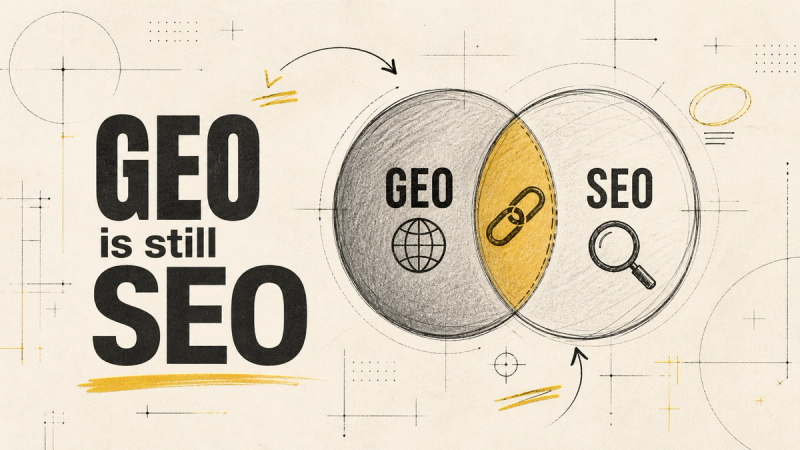
Google's recent updates mean that GEO and AEO are now part of broader SEO strategies. For small businesses, this means rethinking techniques to improve crawlability and visibility.