Why Custom Code Wins Over n8n for Your Automation Needs

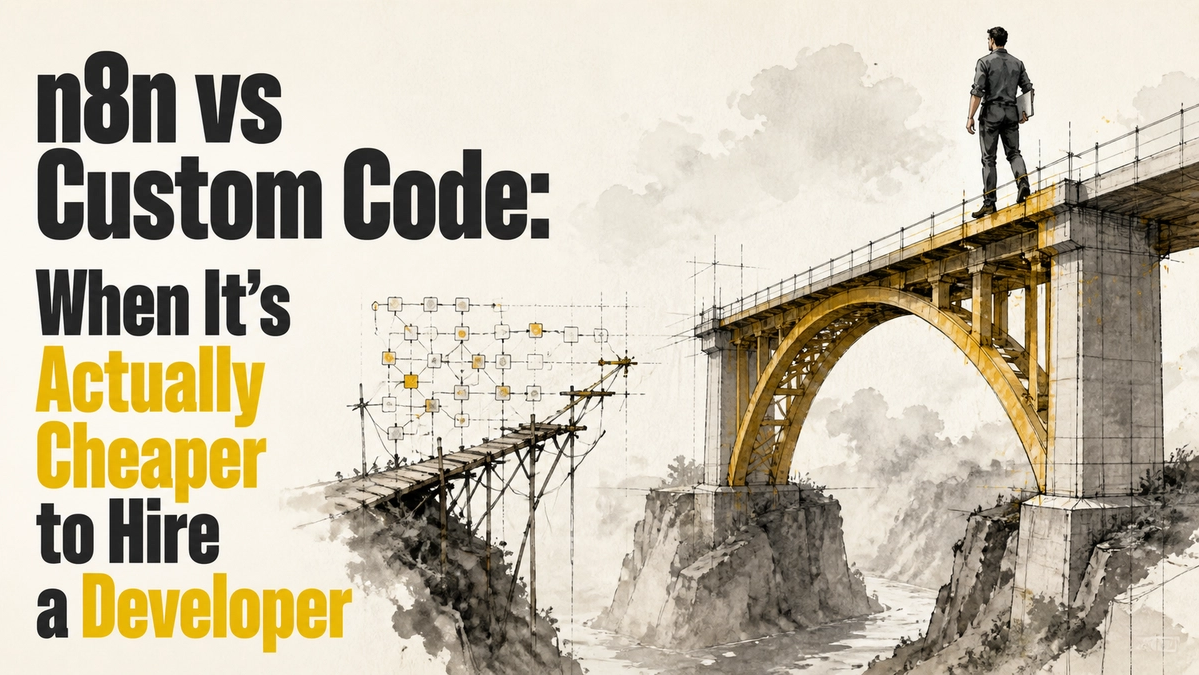
Businesses looking to improve operations often face the choice: n8n vs custom code. No-code tools like n8n promise quick results, but they rarely meet the needs of growing or specialized businesses. Agencies in Pune and elsewhere find that workflow automation ROI drops when tools don't scale with complexity. Relying on generic platforms can waste time and money, especially when requirements shift or outgrow what n8n offers. Choosing tailored code often delivers longer-lasting value, ensuring your automation supports what makes your business unique.
Understanding the Limitations of n8n in Automation
n8n has made no-code automation more accessible, but its convenience comes with clear trade-offs. Many businesses turn to n8n for early-stage automation, only to discover major limitations as workflows grow more complex. Workflow branches, deep integrations, or heavily customized logic often lead to frustration. This leaves teams patching together workarounds or coping with issues the platform wasn't made to handle. Reports from n8n users and automation practitioners consistently point out that as needs become more specialized, no-code quickly becomes a stumbling block rather than a solution [1]. The upshot is that organizations risk tech debt, wasted man-hours, and missed opportunities when workflows stretch beyond n8n's intended scope.
The Benefits of Custom Code Solutions for Businesses
Opting for custom code gives businesses freedom and control that no-code tools can't match. Unlike n8n, custom-built automation aligns directly with unique processes. This flexibility means teams can adapt flows rapidly as conditions change or as regulations shift. Case studies show companies using custom automation report meaningful boosts in operational efficiency when compared to those stuck on inflexible no-code platforms [3]. Custom code can also integrate with specific legacy systems or third-party services n8n doesn't support. For business automation in Pune and similar markets, investing in custom code accelerates innovation and ultimately delivers higher workflow automation ROI. A reliable, tailored approach always fits the business rather than forcing the business to fit the tool [2].
Real-World Example: Successful Custom Code Implementation
A global supply chain and logistics provider shifted from patchwork automation to a custom-coded solution after outgrowing generic workflow tools. Their existing setup began breaking down as staff had to pivot between multiple disconnected toolsets to gather partner and inventory data manually. On switching to a custom application, the company regained full control and cut down the manual work of hunting for information across systems, allowing purchasing staff to focus on higher-value tasks even as purchase order volume climbed sharply [4]. This change didn't just cut costs: it eliminated recurring workaround headaches and positioned the company to adapt future processes quickly. Such stories are common among organizations aiming for workflow automation ROI well beyond what generic tools provide.
Considering the Cost: Custom Solutions vs. No-Code Tools
At first glance, no-code tools like n8n seem like budget-friendly choices. Their subscription models and quick deployments can look attractive for startups or small projects. However, initial savings often turn into hidden costs as workflows need more complexity, integrations, or performance. Custom solutions require upfront investment—mainly in development or hiring expertise—but this pays off over time. Forrester Research has warned that unmanaged technical debt, much of it stemming from stopgap automation and tooling choices, is set to affect a majority of organizations at moderate-to-high severity in the near term, driving up long-term costs and manual interventions [5]. When factoring in workflow automation ROI, businesses in Pune and elsewhere see that tailored code is more cost-effective in the long run, especially as needs evolve.
Counterarguments: Why Some Favor n8n Over Custom Code
Critics argue that n8n and other no-code tools get teams moving quickly, cutting development cycles and upfront costs. For simple processes or startups with modest needs, these platforms do offer rapid value. However, these gains are short-lived. As businesses grow or demands change, n8n frequently hits walls that stall both efficiency and adaptability. While quick wins matter, settling for a tool that can't evolve alongside the business means higher switching costs and lost productivity over time. The long-term efficiency, adaptability, and ROI of custom code outweigh the short-lived perks offered by no-code automation [2]. For organizations with specific or scaling needs, the answer to n8n vs custom code is clear: build what fits your future, not just your present.
Frequently Asked Questions
What are the main limitations of n8n?
n8n struggles with complex workflows, advanced data handling, and custom integrations. It often forces users into workarounds, increasing the risk of technical debt as needs evolve. For teams with unique requirements, these constraints become significant bottlenecks.
How can custom code improve business processes?
Custom code allows automation to match your business processes, not the other way around. Teams can automate specific tasks, build specialized logic, and adapt quickly as their sector or clients change. This flexibility supports higher growth and efficiency.
Are there specific scenarios where n8n is a better choice?
n8n is a good fit for simple, standard automations or proofs-of-concept. Small businesses with generic needs might benefit from its ease of use. As soon as workflows demand advanced logic or integration, custom code or professional solutions become preferable.
What costs should businesses consider when opting for custom code?
Businesses need to weigh initial development and maintenance costs against long-term savings in operational efficiency, support, and scalability. While custom solutions require upfront investment, they can offer lower overall expenses and far fewer process headaches over time.
Workflows will only get more complex as businesses grow and regulations change. Companies that make the right automation choices now lay the foundation for seamless, effective operations in the future. Expect the demand for tailored, flexible solutions to keep growing as operations evolve and competition increases.
References
- n8n Community — When n8n Is NOT the Right Choice for AI Automation
- Demski Group — No-Code Automation vs Custom Software: Which Is Better?
- Cobe Is Fresh — No-Code vs. Custom Development: Why One Can't Replace the Other
- WWT — Evolving Supply Chain Operations with Automation
- WordPress VIP (citing Forrester Research) — Avoiding Forrester's Tech Debt 'Tsunami'
Comments
Be the first to comment.
Related reads
When Not to Automate: Understanding AI Automation Limitations
Automating a broken process only accelerates failure. Before implementing AI, it’s crucial to stabilize operations, define accountability, and assess risks.

Preparing Your Team for Web AI Design Shifts: Prioritizing User Experience
In the face of rapidly evolving AI and web design technologies, prioritize user experience over simply adopting the latest tools. Discover how to prepare your team for these essential shifts.