
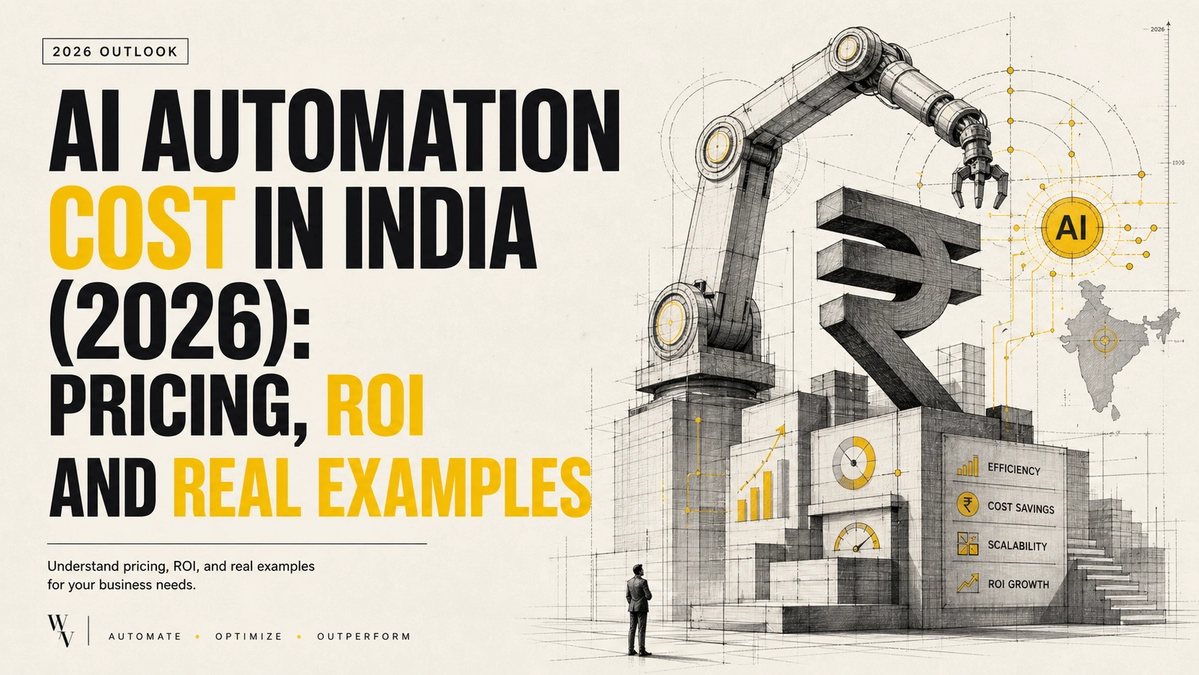
Understanding AI Automation Costs in India: What to Expect by 2026

AI automation cost in India will be a deciding factor for many businesses planning their technology strategies through 2026. Business owners are already weighing investment figures against practical results, especially as AI automation for small business India matures. The stakes are high: the right workflow automation ROI can completely reshape margins, but uncertainty about expenses makes some hesitate. Concrete n8n workflow examples and proven cost savings show that the initial price tag is no roadblock for ambitious leadership looking to outperform their competitors. Read on to see how those willing to adapt will benefit most.
Current Landscape of AI Automation Costs in India
With 2026 on the horizon, AI automation cost in India is under sharp scrutiny. Prices span from a few thousand dollars for limited, targeted deployments to several hundred thousand for broader, more complex integrations [1]. For smaller businesses, tailored solutions are bringing AI automation for small business India into reach while large enterprises continue to lead bigger investments. This flexibility results from a rapidly expanding vendor market and increased demand. Companies are not only comparing up-front costs but also examining scalability and hidden expenses. In practical terms, expense is no longer a block to adoption—firms across industries are buying in, convinced that the payback outruns the initial costs. Cost transparency and competition are making AI attainable for more organizations every year [1].
Real-World Examples of AI Automation Implementation
Success stories stamp out lingering doubts about investing in AI automation in India. One standout example is a manufacturing company that slashed both production time and operations costs after deploying targeted AI-powered workflow automation [2]. Their experience reflects what the numbers suggest: clear workflow automation ROI becomes visible soon after implementation. Even small companies are taking advantage of drag-and-drop tools and building custom flows—think n8n workflow examples that automate repetitive office processes or streamline order management. These stories illustrate why investment in AI is not a risky experiment, but a calculated move that strengthens efficiency. Evidence from the field consistently shows smarter operations once AI enters the mix [2].
Calculating ROI: What Businesses Can Expect
The main attraction of any AI project is the measurable return. Reports confirm that businesses in India see rapid improvements in speed and output quality, slashing operational costs beyond what manual efforts could achieve [3]. Calculating workflow automation ROI boils down to comparing pre- and post-automation costs and productivity. Typical examples: fewer labor hours required per task, reduced error rates, and real-time insights for smarter decisions. Even AI automation for small business India often pays for itself within the first two years. Technology partners now provide clear tracking and reporting to prove impact, not just promise it. The numbers support the shift—those who invest see the rewards track reliably to the bottom line [3].
Challenges of Implementing AI Automation
Adopting AI automation in India is not a frictionless process. Resistance to change remains a major obstacle, especially in organizations with established, manual routines. Businesses must also invest in developing digital skills among their workforce, or risk not utilizing expensive tools to their fullest [4]. Infrastructure is another hurdle—AI projects require reliable power and internet, which can mean further spending before projects even begin. Yet, none of these hurdles outweigh the long-term advantages. Strategic planning and gradual scaling ensure companies bypass initial setbacks. The firms most committed to transformation are meeting these challenges head-on and quickly closing the gap on competitors [4].
Strong Counterarguments Against AI Automation Investments
Skeptics say the price tag for AI automation in India is simply too steep, especially for small and medium-sized businesses [5]. They point to early adoption risks and fear that spending heavily now won't guarantee direct benefits. These concerns are not without merit—upfront investment is real, and not every implementation goes smoothly. However, repeated studies and case reports show that initial spending is dwarfed by efficiency gains and cost reductions in the long run [3]. The numbers don't favor inaction: companies that hesitate or stall on adoption actually put themselves at further disadvantage. The risk lies not in acting, but in waiting while others move ahead.
Frequently Asked Questions
What are the typical costs for AI automation in small businesses in India?
AI automation cost in India for small businesses typically ranges from a few thousand to several tens of thousands of dollars. The final figure depends on the complexity of workflows, staffing needs, and how much the business wants to automate [1]. Costs are trending downward as more providers enter the market.
How can companies measure the ROI of AI automation?
Businesses should compare key performance metrics before and after automation. Metrics like labor savings, turnaround time reductions, fewer errors, and cost savings help measure actual workflow automation ROI. Many vendors now include built-in analytics to help with this assessment [3].
What common challenges do businesses face when adopting AI automation?
Organizations often encounter employee pushback, skill gaps, and infrastructure shortfalls. Overcoming these means training teams, modernizing IT, and supporting cultural shifts. The most successful firms treat these as real project phases, not afterthoughts [4].
Are there any notable success stories from companies using AI automation?
Yes, several. For example, a manufacturing company in India achieved significant reductions in production time and overall costs after using AI automation, showing strong proof of value and motivating other firms to start their own projects [2].
AI-powered automation is advancing quickly, moving from early adopters to mainstream practice. Companies willing to rethink routine work will see higher returns, more satisfied staff, and a business model that stands strong no matter the challenge. Expect more rapid changes soon—proactive automation is not just smart, it's necessary.
References
- Statista — Artificial Intelligence – India | Statista Market Forecast
- McKinsey & Company — Adopting AI in Manufacturing at Speed and Scale
- PwC — How Leading Companies Generate ROI from AI
- Deloitte — Deloitte Insights: Cognitive Technologies
- Gartner — Gartner Identifies Four Emerging Challenges to Delivering Value from AI Safely and at Scale
Comments
Be the first to comment.
Related reads
Why Custom Code Wins Over n8n for Your Automation Needs
Explore the advantages of choosing custom code over n8n for automation. Learn how tailored solutions can save your business time and money in the long run.
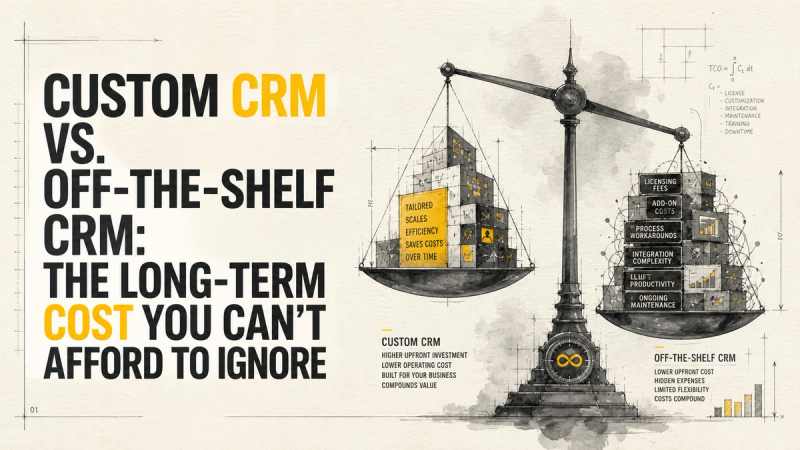
Long-Term Costs of Custom CRM vs Off-the-Shelf CRM: A Financial Perspective
Discover why analyzing long-term costs is essential in the custom CRM vs off-the-shelf debate. A tailored CRM may be the smarter investment for your business.